07 September 2013

Men's Fellowship at Redeemer Church 21 September 2013

We plan to kick off the Men's Fellowship this year on Saturday, 21 September at 8:00am with a special guest.  Jim Seamons was a WWII bomber pilot who flew 30 missions before being shot down over Belgium.  Back in the USA he married, raised a family, worked and served as a lay preacher in the Reformed Episcopal church. Jim will be discussing his varied experiences and his vibrant faith in Christ as we enjoy a continental breakfast together.  All are welcome to this special event.  Please save the date!

21 August 2013

Book Review: "A Little Book for New Theologians: Why and How to Study Theology." By Kelly M. Kapic


A Little Book for New Theologians: Why and How to Study Theology. By Kelly M. Kapic. Downers Grove, Illinois: IVP Academic, 2012. 126 pages. ISBN 978-0-8308-3975-9. $8.00.

Summary:  With this excellent little book Dr. Kapic helps his readers avoid the strong dichotomies of what he calls theological detachment, “a view which produces a divide between spirituality and theology, between life and thought, between faith and agency.”  The opening three chapters comprising the first of two parts seek to answer the question, “Why study Theology?”  In his response Dr. Kapic asserts that our notions about God powerfully influence our identity, affect our lives and give shape to our worship.  Eighteen years of pastoral ministry in a Presbyterian church have confirmed for me the importance and challenge of this truth.  The challenge comes, as Dr. Kapic notes, from indwelling sin and the human penchant for self-absorption.  This makes forging good theology difficult.  The importance lies in its power to affect our faith.  Insofar as our theology is unsound, our enjoyment of God will be diminished, for we all were created to “reflect his glory and bask in his love.”  Hence we must learn the song of God’s redemption as His Spirit reveals the word to our minds and seals the word to our hearts.  This is anything but a dry and dreary exercise, and one can imagine the sparkle in Dr. Kapic’s eye as he writes, “we are on an adventure.”  Yes, and God calls us “to come, to gaze at Christ, to hear his word and to respond in faith and love.”
Kelly Kapic

Part Two consists of seven chapters and delves into the characteristics of faithful theology and theologians.  This discussion is germane to all who speak of God because “whenever we speak about God we are engaged in theology.”  Here Dr. Kapic stresses the inseparability of one’s life and theology.  It is a “practical science” in which we are not neutral observers but fully engaged pursuers “who wrestle and rest in the God who has made himself known.”  In a culture satiated with rampant hypocrisy and empty promises it is refreshing to hear him say that ours must be lived theology.  How sorely we moderns need to grasp this point!  The theologian is one “who freely soaks in the love of the Father and the grace of the Son and finds renewal in the strong fellowship of the Spirit.”  This refusal to divorce theological considerations from practical human application is what Dr. Kapic calls an “anthroposensitive theology.”

Six traits of a good theologian are highlighted.  First, one must exercise “faithful reason” or a reasoning from God’s revelation that is full of faith.  A good theologian resists emotionalism on the one hand with his reason and guards against rationalism on the other hand with his faith.  Second, he must be committed to prayer since God is not the mere object of study but the Lord he worships.  Only by prayer may we avoid making our faith “something we discuss rather than something that moves us.”  Third, a good theologian must be humble and penitent.  Pride sounds the death knell of good theology.  As finite and fallen creatures, we are sinners who live before One who is infinitely greater than ourselves and we depend completely on His grace and stand in need of the wisdom and insight of others.

Fourth, a good theologian must be compassionate.  He knows “that God’s glory is gracious and that his grace is glorious,” and this leads to a “public theology” that is sympathetic toward and concerned for the vulnerable.  Fifth, a good theologian seeks the counsel of saints both past and present.  “The Spirit guides the church as a body and not just a collection of assorted individuals.” Consequently Dr. Kapic underscores the benefit of engaging with tradition and locates himself among the Reformed.  But he quickly adds that our final authority is God speaking in and through the Scriptures.  “Our worship,” he says, “is not a solo but a chorus of praise.”  Finally, echoing the Psalmist he says a good theologian must love the Scriptures.  “Oh how I love your law!” (Psalm 119:97).  The self-revelation of God in the Bible is the means by which He forms His church and shapes our worship.  Indeed, it is in Scripture that “we feel the warmth of his breath” having our memories stimulated, our hearts enlivened, our souls comforted and our affections drawn to Christ.

Evaluation:  This is an excellent, well-written little book.  One must not be fooled by its brevity and simplicity into thinking it is insignificant or trivial.  Part of its value lies in its accessibility to all Christians.  The book is little for good reason.  As a primer for new theologians it is not likely to intimidate or overburden them.  It is not meant for extended theological study or a full scale examination of doctrine.  The “full course meal” will likely follow.  This little book is meant to whet the theological appetite and prepare the aspiring soul, and in both goals it succeeds.  The book’s content is concise but its wisdom is deep.  Dr. Kapic’s straightforward presentation offers profound truths and practical wisdom in a pleasant and irenic style.  It is said that great beauty is often most appreciated through simplicity and candor.  Of this Dr. Kapic’s book is a good example.  The material itself is biblical and sound, the style direct and fluid, the spirit gracious and affable.  I warmly recommend it.  This book was provided free from IVP Academic with my promise to post an unbiased review.

07 August 2013

Stewardship

Elder Mark Van Drunen continues our studies of the Spiritual Disciplines this week on the issue of stewardship.


05 August 2013

Rest

We again had the privilege this week of hearing God's Word brought to us by Dr. T. David Gordon.

Dr. T. David Gordon


02 August 2013

Evangelism

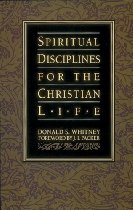
This week Elder Van Drunen walks us through the Evangelism chapter of Whitney's book, "Spiritual Disciplines for the Christian Life."


31 July 2013

The Light That Leads

Elder Van Drunen brought us the evening message this week. Be blessed.


30 July 2013

Sheep and Shepherds

Dr. T. David Gordon blessed again this week as he brought us God's Word.


Dr. T. David Gordon
    So I exhort the elders among you, as a fellow elder and a witness of the sufferings of Christ, as well as a partaker in the glory that is going to be revealed: shepherd the flock of God that is among you, exercising oversight, not under compulsion, but willingly, as God would have you; not for shameful gain, but eagerly; not domineering over those in your charge, but being examples to the flock. And when the chief Shepherd appears, you will receive the unfading crown of glory. Likewise, you who are younger, be subject to the elders. Clothe yourselves, all of you, with humility toward one another, for “God opposes the proud but gives grace to the humble.”
    (1 Peter 5:1-5 ESV)

27 July 2013

Room for Boasting

Elder Ray Gilliland brings us the evening message this week, "Room for Boasting."


Elder Ray Gilliland

26 July 2013

Motivations to Serve

Mr. Kevin Glazier brings us this weeks lesson from the "Spiritual Disciplines for the Christian Life."


25 July 2013

Living Stones

This week we had the pleasure of having Dr. T. David Gordon fill our pulpit. He is currently Professor of Religion and Greek at Grove City College and an ordained minister in the PCA.  Prior to that, he taught New Testament at Gordon-Conwell Theological Seminar. Be blessed as you listen to the Word he brought to us.

Dr. T. David Gordon


12 July 2013

A Time of Deliverance - 1 Samuel 11

Evening sermon from our own James Pavlic.


    Then Nahash the Ammonite went up and besieged Jabesh-gilead, and all the men of Jabesh said to Nahash, “Make a treaty with us, and we will serve you.” But Nahash the Ammonite said to them, “On this condition I will make a treaty with you, that I gouge out all your right eyes, and thus bring disgrace on all Israel.” The elders of Jabesh said to him, “Give us seven days' respite that we may send messengers through all the territory of Israel. Then, if there is no one to save us, we will give ourselves up to you.” When the messengers came to Gibeah of Saul, they reported the matter in the ears of the people, and all the people wept aloud.
    Now, behold, Saul was coming from the field behind the oxen. And Saul said, “What is wrong with the people, that they are weeping?” So they told him the news of the men of Jabesh. And the Spirit of God rushed upon Saul when he heard these words, and his anger was greatly kindled. He took a yoke of oxen and cut them in pieces and sent them throughout all the territory of Israel by the hand of the messengers, saying, “Whoever does not come out after Saul and Samuel, so shall it be done to his oxen!” Then the dread of the LORD fell upon the people, and they came out as one man. When he mustered them at Bezek, the people of Israel were three hundred thousand, and the men of Judah thirty thousand. And they said to the messengers who had come, “Thus shall you say to the men of Jabesh-gilead: ‘Tomorrow, by the time the sun is hot, you shall have salvation.’” When the messengers came and told the men of Jabesh, they were glad. Therefore the men of Jabesh said, “Tomorrow we will give ourselves up to you, and you may do to us whatever seems good to you.” And the next day Saul put the people in three companies. And they came into the midst of the camp in the morning watch and struck down the Ammonites until the heat of the day. And those who survived were scattered, so that no two of them were left together.
    Then the people said to Samuel, “Who is it that said, ‘Shall Saul reign over us?’ Bring the men, that we may put them to death.” But Saul said, “Not a man shall be put to death this day, for today the LORD has worked salvation in Israel.” Then Samuel said to the people, “Come, let us go to Gilgal and there renew the kingdom.” So all the people went to Gilgal, and there they made Saul king before the LORD in Gilgal. There they sacrificed peace offerings before the LORD, and there Saul and all the men of Israel rejoiced greatly.
    (1 Samuel 11 ESV)

11 July 2013

Who Is This Man? - Luke 5

Sermon delivered by Elder James Pavlic.


James Pavlic
    On one occasion, while the crowd was pressing in on him to hear the word of God, he was standing by the lake of Gennesaret, and he saw two boats by the lake, but the fishermen had gone out of them and were washing their nets. Getting into one of the boats, which was Simon's, he asked him to put out a little from the land. And he sat down and taught the people from the boat. And when he had finished speaking, he said to Simon, “Put out into the deep and let down your nets for a catch.” And Simon answered, “Master, we toiled all night and took nothing! But at your word I will let down the nets.” And when they had done this, they enclosed a large number of fish, and their nets were breaking. They signaled to their partners in the other boat to come and help them. And they came and filled both the boats, so that they began to sink. But when Simon Peter saw it, he fell down at Jesus' knees, saying, “Depart from me, for I am a sinful man, O Lord.” For he and all who were with him were astonished at the catch of fish that they had taken, and so also were James and John, sons of Zebedee, who were partners with Simon. And Jesus said to Simon, “Do not be afraid; from now on you will be catching men.” And when they had brought their boats to land, they left everything and followed him.
    While he was in one of the cities, there came a man full of leprosy. And when he saw Jesus, he fell on his face and begged him, “Lord, if you will, you can make me clean.” And Jesus stretched out his hand and touched him, saying, “I will; be clean.” And immediately the leprosy left him. And he charged him to tell no one, but “go and show yourself to the priest, and make an offering for your cleansing, as Moses commanded, for a proof to them.” But now even more the report about him went abroad, and great crowds gathered to hear him and to be healed of their infirmities. But he would withdraw to desolate places and pray.
    On one of those days, as he was teaching, Pharisees and teachers of the law were sitting there, who had come from every village of Galilee and Judea and from Jerusalem. And the power of the Lord was with him to heal. And behold, some men were bringing on a bed a man who was paralyzed, and they were seeking to bring him in and lay him before Jesus, but finding no way to bring him in, because of the crowd, they went up on the roof and let him down with his bed through the tiles into the midst before Jesus. And when he saw their faith, he said, “Man, your sins are forgiven you.” And the scribes and the Pharisees began to question, saying, “Who is this who speaks blasphemies? Who can forgive sins but God alone?” When Jesus perceived their thoughts, he answered them, “Why do you question in your hearts? Which is easier, to say, ‘Your sins are forgiven you,’ or to say, ‘Rise and walk’? But that you may know that the Son of Man has authority on earth to forgive sins”—he said to the man who was paralyzed—“I say to you, rise, pick up your bed and go home.” And immediately he rose up before them and picked up what he had been lying on and went home, glorifying God. And amazement seized them all, and they glorified God and were filled with awe, saying, “We have seen extraordinary things today.”
    (Luke 5:1-26 ESV)

09 July 2013

Your Calling?

James Pavlic shares about his time at Reformed Theological Seminary and discusses the issues around the "inward" call and the "outward" call that we experience as Christians.


James & Amanda Pavlic

08 June 2013

New Series - "Ask the Pastor"

Ask the Pastor

Are denominations important?

For the most part, I think denominations are a good thing.  In a world without sin, the church would be one visible body having no disagreements or divisions.  But we live in a fallen world and congregate with sinners.  Even the best of men differ on their interpretations of Scripture.  Those who deviate from the truth on essential points of doctrine, such as Christ’s deity or justification by faith, are not Christians.  But those who differ on non-essential points of doctrine are simply Christians who disagree.  Should they congregate together and dissipate their energy wrestling over non-essential matters?  Some do, but most do not.  Rather than endure the bitterness of continual infighting, God has ordained there to be different branches or denominations of the true church.  Believers may situate themselves in the communion that most closely agrees with their own convictions.  This frees them up to rejoice with and benefit from believers of different convictions regarding non-essential matters while striving to maintain the unity of the church.  The differences are important but secondary, so we consider each other members of the church invisible while we work and serve in our respective visible churches.  I am thankful that the different denominations provide a temporary solution to the problem of incredible diversity among redeemed but fallen followers of Christ.  As long as we see in a mirror dimly, we will need these kinds of concessions to maintain a peaceful, productive, diverse church.

This new series is to address current issues and questions in modern evangelicalism. If you have a question feel free to submit it in the comment section below or send it to redeemeroffices@gmail.com. I hope this is helpful and look forward to addressing your concerns & questions.

Pastor Scott Wright

05 June 2013

Walking on Water - Matthew 14:22-33

Rev. Jason Strong
Recently we welcomed to our pulpit Rev. Jason Strong.  Rev. Jason Strong has been laboring for God’s glory at Zion since 2001.  He is married to his wife Robyn and  together they have six children.  Pastor Strong received his Master of Divinity degree from Reformed Theological Seminary, Jackson Mississippi in 1995. In the past Jason has served as a church planter, youth pastor, and has worked with Campus Crusade for Christ ministries. Please enjoy and be blessed by the Word he brought to us.


29 April 2013

Redeemer's New Website

Have a look at Redeemer's new website.  We're still tweaking but we're on our way.

20 March 2013

Religious Bullies


Many first century Pharisees were doctrinally orthodox, religiously vigilant and spiritually dead.  Sitting in Moses’ seat they taught scores of things in accord with what was revealed in the Mosaic legislation (Mt 23:2-3).  They scrupulously tithed even the mint, dill and cumin (Mt 23:23).  But in their unregenerate condition they had neither the will nor the desire to pursue the weightier matters of the law.  They neglected justice and mercy and faithfulness, or perhaps better, faith! (Mt 23:23).  They had no faith!  Thus, they were utterly incapable of pleasing God (Heb 11:6).  Luke says they neglected the love of God (Lk 11:42).  That is, they failed in the one area that legitimizes religion and makes it worthwhile.  These Pharisees were not sincere believers let alone true shepherds.  While they were occupied with truth, their minds were dark.  While they expressed concern for the Law, their wills were rigid.  While they became preoccupied with religion, their hearts were cold.  While their lips sounded pious their souls were profane.  Hence, they had no spiritual power and were incapable of actually edifying the people or feeding the flock.  They were not just personally weak but spiritually lifeless!  Their appearance was terribly misleading.  Sincerely religious people were deluded by their façade.  These poor folks looked up to the Pharisees.  They trusted them.  They were abused by them!  The Pharisees wielded power, exerted influence, became rich and enjoyed prestige all by exploiting popular credulity.  The leaves of their profession, i.e. their religiosity, held out great promise of spiritual fruit.  But the branches of their practice were sadly and utterly barren.  How apt was that cursed and withered fig tree as a symbol of these unfruitful usurpers! (Mk 11:13-14).  To make up for their lack of spiritual power in what is mistakenly called their “ministry” (perhaps “machinery” is a better term), the Pharisees exaggerated their authority, abused their power and behaved like religious bullies.  

Bullies are deeply insecure.  Those of the religious persuasion are no different.  They feel the need to exaggerate ecclesiastical authority and abuse spiritual power so they can shield their own vulnerability.  They often boast and brag, shout and jeer, criticize, cajole and condemn all in the service of personal protection and advancement.  By this means they can deflect the force of truth and true godliness.  For them, the greatest evil is pain, not sin.  They go to great lengths to avoid it, often pushing if not crossing the boundaries of orthodoxy and legality just to preserve themselves from it.  This includes the annoying and destructive tactics of intimidation.  They maneuver, manipulate and manhandle so as to browbeat their sheep into frightened submission.  Bereft of true humility, lacking in true courage and ignorant of true greatness, they employ the methods of intimidation to maintain their position, preserve their power and shield their fragile egos.  How ironic!  Those who so strenuously claim to have courage are so desperately fraught with cowardice.  We are all by nature weak and cowardly, and as Christians we may freely admit it and seek our strength from the Lord.  But not the religious bully.  He cannot bear that kind of exposure.  It is too painful.  He hates the vulnerability.  He despises the pain.  So in desperate attempts at self-preservation he berates and beats on his sheep.  He bullies them!  I am confident that part of those burdens laid on people’s shoulders by the Pharisees were the upshot of their own insecurities.  It kept the populace in line.
There are many in the pastorate who follow the Pharisaic pattern.  They are prone to this exaggeration of authority and abuse of power.  This is why Peter expressly warns against it.  I exhort the elders among you, he says, shepherd the flock of God that is among you… not domineering over those in your charge, but being examples to the flock (1Pet 5:1-3).  That is to say, don’t seek to overpower them intellectually or emotionally or spiritually or even physically.  Think of those who sprinkle Greek words throughout their sermons, or utilize emotive powers to manipulate crowds, or speak truth unseasonably to silence any challenge, or even prey upon weak and lonely women!  Do not dominate them, says Peter!  Rather, serve them in love and humility, for this is true greatness in the kingdom of God.  The unbelieving world understands, appreciates and exercises heavy-handed authority, brute strength and raw power.  But the church must be a place where genuine Christ-likeness, true greatness, is exemplified by those ordained to lead and serve the body (Mk 10:42-43).  God intends by this means to provide His people with living, breathing illustrations of loving service.
Therefore pastors and elders should strive to set before the church loving, humble examples of piety for Christ’s disciples to emulate (Heb 13:7).  And emulate they will!  God made us after His own image.  That means, in part, that we are social beings.  As such we will influence and be influenced by others.  It is inevitable!  Throughout life we “catch” far more than we “fetch”.  The example of others will exert a powerful influence upon our lives, often more so than their teaching.  Paul recognized this phenomenon and advised Timothy accordingly.  Keep a close watch on yourself and on the teaching.  Persist in this, for by so doing you will save both yourself and your hearers (1Tim 4:16).  First yourself, then your teaching!  The order is significant.  Leaders must exhibit a credible profession, otherwise they will discredit themselves and injure others (Mt 7:15-20).  Does not Paul warn against the evil influence of bad company? (1Cor 5:6; 15:33).  He knows the power of social interaction and personal influence.  I note with interest how congregations, for the most part, assume the tone and demeanor of their leadership, especially their pastors.  This is not necessarily bad.  In fact it can be a tremendous benefit.  But it does suggest we employ great caution in choosing those who lead us and rule over us!
The Christian need not tolerate religious intimidation and harassment.  Under the blessing of God for the glory of Christ by the power of the Holy Spirit he may stand firm against such bullying.  He need not be angry, disrespectful or anxious.  Rather, he may be steady in his resolve to guard that glorious freedom for which he and every other Christian has been redeemed.  He may and should use that freedom through love to serve others (Gal 5:13).  Let’s heed Paul’s counsel and pay careful attention to ourselves and all the flock.  Let’s care for the church of God which He obtained with His own blood (Acts 20:28).  It is inevitable that fierce wolves will come in among us, not sparing the flock.  They will speak twisted things to draw away the disciples after them (Acts 20:29-30).  These may not be obvious things.  They may not be blatantly heretical things.  They are twisted things, truths so bent and warped and distorted that they have become something other than the gospel.  An overemphasis here, an imbalance there, an unbiblical tone everywhere.  Beloved, do not believe every spirit, but test the spirits to see whether they are from God, for many false prophets have gone out into the world (1John 4:1). 

26 February 2013

Emotionalism


The crowds escorting Jesus into Jerusalem were animated by various things.  Some were pilgrims en route to celebrating Passover.  Others were looking for a healing touch from Jesus or just plain curious about His ability to raise the dead (Jn 12:9).  Still others were merely swept up in the excitement of an enthusiastic crowd and really didn't know what was going on.  Each person had his own reason for walking, singing, shouting and laying down branches.  The one thing they all seemed to have in common was excitement.  In terms of redemptive history, it was the glorious fulfillment of messianic prophecy (Mt 21:4-5; Zech 9:9; Gen 49:11).  The majestic heir of David was entering Jerusalem amid loud acclamations of praise and salutation.  He didn't arrive in a chariot or on a war horse or with an army.  He came as the Prince of Peace doing what rulers usually did in times of peace, viz. riding a colt (cf. 1Kgs 1:33).  In terms of human psychology, this was an example of misguided expectations mingled with strong emotions.  Those present were probably greatly stirred by the thrilling experience of participating in such an event.  How often does one get to be part of a vast multitude escorting a prophetic miracle-worker into a capital city?  The event was filled with emotion.  Given their mistaken expectations, there was likely a great deal of confusion as well.  Only days later, many if not all in this crowd would turn on Jesus and demand His execution.  Crucify Him! They would yell, and yell it more than once (Mk 15:13-14).

Emotionalism is a very dangerous "-ism."  It is the label we give that approach to faith and life which elevates feelings, moods and emotions to the top tier of guiding principles.  Sadly it characterizes many modern American Christians.  In and of themselves feelings and emotions are God-given gifts for which we should be thankful.  They are what Robert Lewis Dabney called man's motive power.  The intellect, he said, is that which directs the ship's compass, while the feelings are the elastic energy which throbs within the machinery.  Without them, the ship will be motionless, regardless of how accurate the ship's rudder might guide it.  In most endeavors, to be successful, we need feeling, emotion and excitement to press on and persevere, especially when circumstances get tough.  Jacob's seven years' service under Laban seemed like a few days because of his deep love for Rachel (Gen 29:20).  The Psalmist often expresses his passionate desire to commune with God and worship among the saints (e.g. Psalm 84:2).  It is this heartfelt desire and spiritual joy that enables a believer to persevere through even the most difficult situations.  But unless our emotions are harnessed by truth, they will run away with us.  It is a bit like riding a wild colt which has a mind of its own!  Unharnessed emotions characterize children who are tossed to and fro by the various waves and winds of doctrine (Eph 4:14).  To solve this problem, Paul advises speaking the truth in love (Eph 4:15).  This is what gives the necessary structure within which we may joyfully experience the most powerful of human emotions, those which often imbue our worship in the presence of God!  Sound doctrine, good theology, biblical truth will provide the proper framework within which that glorious, throbbing energy produced by strong, spiritual feeling will infuse and motivate the Christian life.

As I said, it seems modern American Christians are overly-emotional.  Better yet, they are emotional without having a proper framework within which to enjoy their feelings and emotions.  We should not value good feelings, warm impressions and thrilling experiences to the exclusion of sound doctrine.  Regrettably, how one feels has become the only gauge of spiritual health and well-being.  If I feel good, I may conclude that everything is right with my soul.  Modern worship services often cater to this approach.  Whether or not one's worship is "acceptable" is for many a novel and offensive concept (cf. Heb 12:28).  Strange is the "old-fashioned" notion that regardless of how I feel, I should worship the Creator, humbly bow before the King and adore the infinite perfections of Almighty God.  Our generation seems to have forgotten that worship is to be a service to God, not a session for man!  Like those animated crowds escorting Jesus into Jerusalem many today are sincerely enjoying the experience, but are being easily discouraged and disillusioned as difficulties arise.  When Providence brings the many tribulations through which one must pass to enter God's Kingdom (Acts 14:22), the overly-emotional Christian – the rocky ground hearer! – soon withers and falls away (Mk 4:17).  This is tragic and it happens too often.  James is unambiguous in his declaration:  Blessed is the man who remains steadfast under trial, for when he has stood the test he will receive the crown of life, which God has promised to those who love him (Jas 1:12).

What we need today is what we have always needed…  a sure-footed, well-rounded, biblically-founded understanding and commitment to the Lord Jesus Christ.  The wisdom from above is first pure, then peaceable… (Jas 3:17).  Pure doctrine is vital to the Christian life.  Believers should know and embrace and treasure the truths of Christ's incarnation, substitution, crucifixion, resurrection, intercession and ultimate exaltation.  They should be familiar with creation and providence, sin and salvation, faith and repentance, the law and its usage.  They need to know about man's ruin, Christ's redemption and the Spirit's regeneration.  They should study the truths associated with the themes of guilt, grace and gratitude.  Within this doctrinal framework, let the feelings throb and the emotions run deep!  Let us rejoice in the Lord and shout His praise!  Let us experience those glorious foretastes of heaven where the saints will enjoy eternal pleasures at God's right hand (Psalm 16:11).

25 February 2013

Vivification - Colossians 3:12-17

    Put on then, as God's chosen ones, holy and beloved, compassionate hearts, kindness, humility, meekness, and patience, bearing with one another and, if one has a complaint against another, forgiving each other; as the Lord has forgiven you, so you also must forgive. And above all these put on love, which binds everything together in perfect harmony. And let the peace of Christ rule in your hearts, to which indeed you were called in one body. And be thankful. Let the word of Christ dwell in you richly, teaching and admonishing one another in all wisdom, singing psalms and hymns and spiritual songs, with thankfulness in your hearts to God. And whatever you do, in word or deed, do everything in the name of the Lord Jesus, giving thanks to God the Father through him.
(Colossians 3:12-17 ESV)

"...And the injuries and the griefs that He sends are those which tend to mortify our pride and sanctify our souls and therefore, we recognize His hand so that though others meant it for evil God meant it for good."


15 February 2013

Regeneration and Redemptive History - Reformed Forum Podcast

Regeneration and Redemptive History was the topic this week as I joined the Reformed Forum team on their podcast. From the intro...

In this episode of Christ the Center, Rev. Dr. Scott R. Wright develops a redemptive-historical understanding of the doctrine of regeneration. Rev. Wright is senior pastor of Redeemer Church (PCA) in Hudson, Ohio. His dissertation, “Regeneration and Redemptive History,” is a thoroughgoing treatment of regeneration in the tradition of Geerhardus Vos. Often, regeneration is treated statically, without reference to biblical eschatology and the categories of historia and ordo salutis. This can lead to serious problems in systematic theology, such as positing essentially different modes of salvation between the testaments. Wright reorients the discussion along biblical categories and brings a fresh approach to the study of this important Reformed doctrine.

Listen to the podcast here and enjoy.